
Biochar is the solid, carbon-rich material produced by pyrolysis. It is engineered to be stable, porous and versatile — a bridge between waste biomass and durable value across agriculture and industry.
When biomass is pyrolysed, most of its carbon is retained in a black, porous solid. That solid is biochar. Because it resists breaking down, the carbon it contains stays out of the atmosphere for far longer than if the biomass had decomposed or burned.
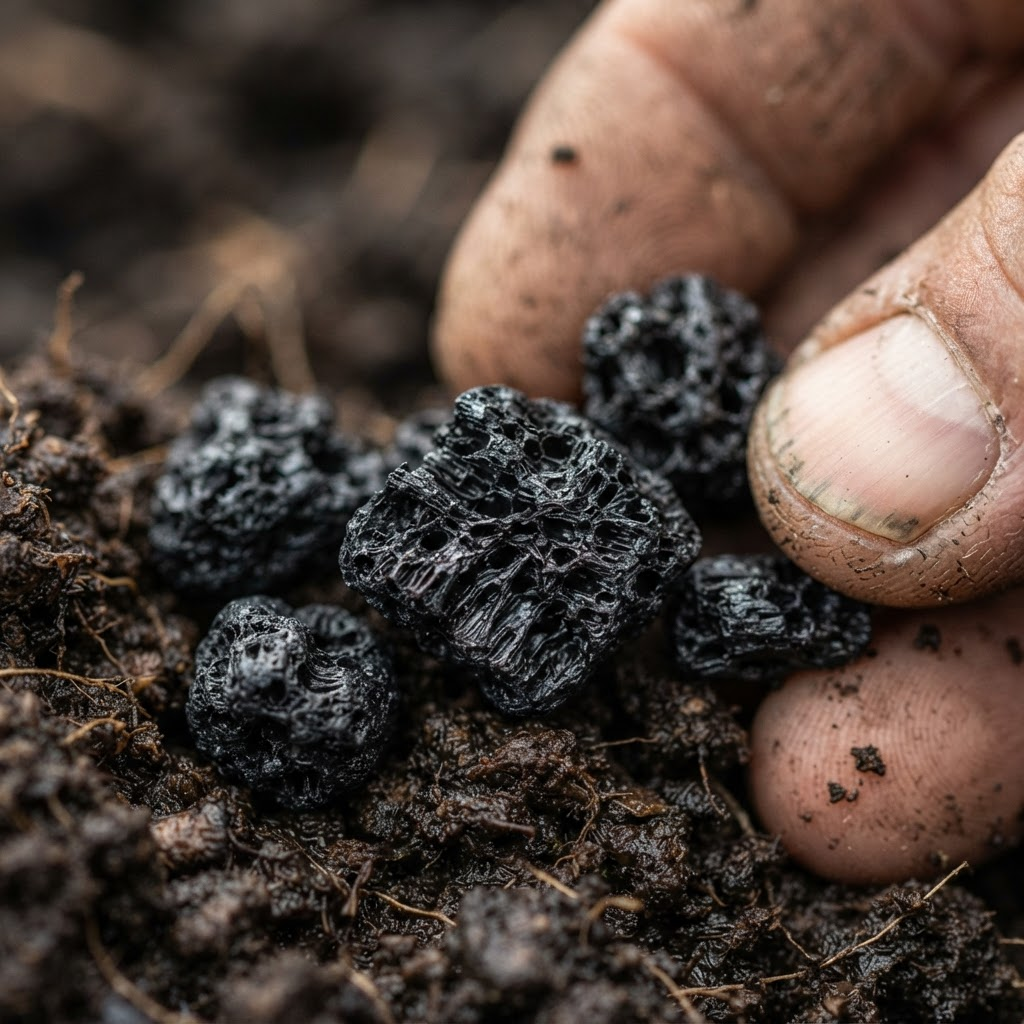
An enormous internal surface area gives biochar its capacity to hold water, nutrients and gases.
Unlike raw biomass, biochar resists rapid decomposition, keeping carbon locked away for a long time.
Properties vary with the biomass and process, so biochar can be tuned toward different end uses.
Biochar sits at the intersection of agriculture, environment and industry. We are evaluating which applications best fit Andalusian feedstocks and markets.
Added to soil, biochar can improve water retention and structure while storing carbon underground for the long term.
Its porous structure makes biochar a candidate material for filtration and treatment applications.
Biochar is being explored as a component in construction materials, composites and other industrial products.
Biochar can carry nutrients and support microbial life, contributing to healthier soil systems.
Because biochar stores carbon stably, applying it — for example to soil — can represent a measurable, durable form of carbon removal. This is a core part of the value we intend to develop.
We welcome early conversations with potential biochar buyers, agricultural partners and industrial users as we shape our development plans.