
Reducing emissions is essential, but the world also needs to remove carbon that is already in the atmosphere. Biochar offers one of the more durable and measurable removal pathways available today.
Plants pull CO2 from the air as they grow. Left alone, that carbon returns to the atmosphere when the biomass decomposes or burns. Pyrolysis interrupts that cycle by converting the biomass into stable biochar — keeping the carbon out of the air for the long term.
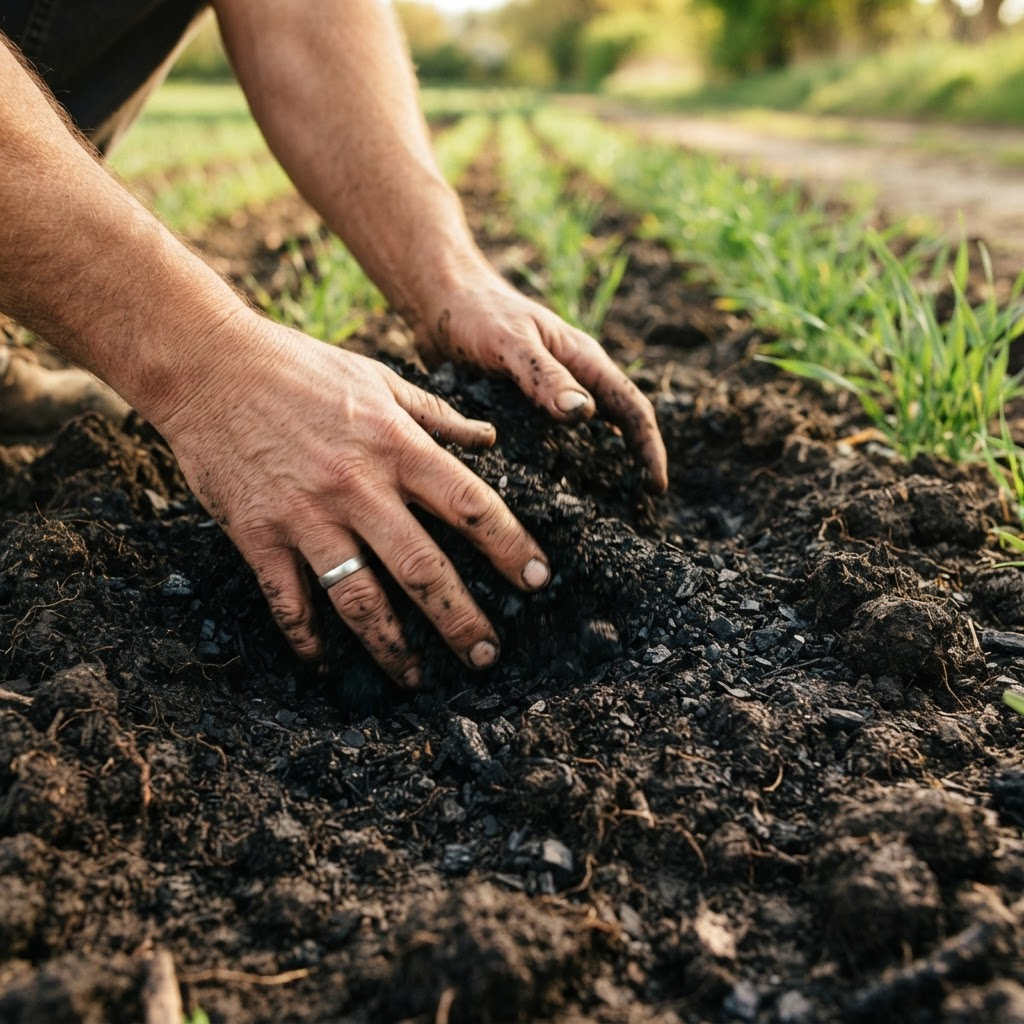
A credible carbon-removal credit must satisfy several conditions. These principles guide how we intend to approach carbon removal.
The quantity of carbon stored can be quantified based on biochar mass and stable-carbon content.
Stable biochar carbon is designed to remain locked away for a long time rather than re-entering the atmosphere.
Independent methodologies and monitoring underpin credibility — nothing should be taken on trust.
Removal that would not have happened otherwise is what gives carbon credits their real value.
MRV is the backbone of trustworthy carbon removal. Our intention is to build on recognised methodologies and independent verification from the outset.
Track biomass in and biochar out, with sampling to characterise stable-carbon content.
Use recognised carbon methodologies to convert measurements into certified removal volumes.
Third-party auditors review data and processes before credits can be issued.
Verified removals become traceable credits that buyers can retire with confidence.
Rather than inventing our own rules, we intend to align with established carbon-removal standards and certification bodies. This gives buyers confidence and keeps our removals comparable and credible.
Note: Certification and partnerships referenced here reflect our intended approach and are part of our development plans. They are objectives, not completed agreements.
We welcome conversations with prospective credit buyers and corporate partners planning durable, verifiable carbon-removal purchases.